Category: Food & Drinks

  • Cloudberry: The golden secret of the Arctic

    Cloudberry: The golden secret of the Arctic

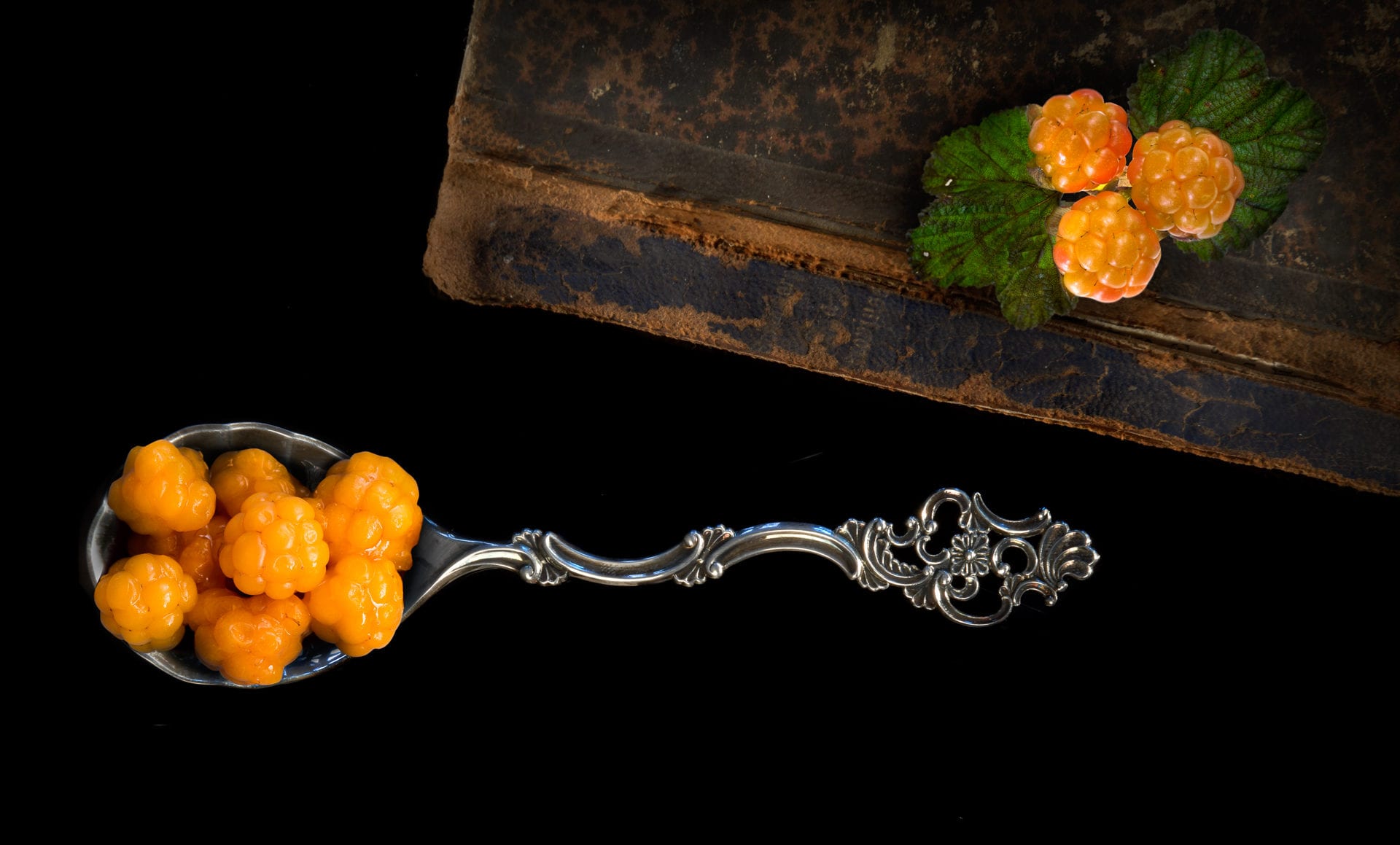
    The cloudberry is one of the rarest berries in the northern hemisphere, only to be found
    in high altitudes of the vast nordic countryside. Because it can only be found in these
    rare places up in the mountains it got its name – cloudberry – as it grows up in the
    clouds.

    Its golden color, powerful nutrients as well as its seclusive harvesting spots make it one of the best kept secrets of the arctic. Growing in areas close to the arctic circle, the cloudberry can only be harvested in a few countries of the world, like Norway. The harvesting season of the cloudberry is very short in Norway and only lasts from July until
    September. Since every plant has just one stem, it will bring out one flower with one sole berry in the end. [show_product]

    Throughout the past centuries, cloudberries were used traditionally by sailors and fishermen to ward off scurvy – a severe disease caused by vitamin C deficiency. Because the northern hemisphere is scarce in fruit and vegetables of high vitamin C contents, the cloudberries’ harvesting spots were a well-kept secret among local settlements.

    Families, like the Hegelund family, kept secret spots to gather cloudberries to themselves for traditions to get through the dark winter times. Cloudberries were gathered in summer to make long-lasting jams for special fruity winter dishes – especially during Christmas time. Two of the most beloved cloudberry recipes among Norwegians are whipped cream, called Multekrem and a flavorful cloudberry soup. Here’s how to make your own tasty Multekrem, rich in Vitamin C:

    Multekrem

    For a tasty Multekrem you need the following ingredients:

    • 350 ml Whipping cream
    • 4 tbsp Sugar
    • 1 tsp Vanilla Extract
    • 100 grams Cloudberry Jam

    Mix all ingredients gently together after whipping the cream and serve the cloudberry cream ice cold after refrigerating for a while. Vanilla cookies complete the nordic taste experience.

     

  • Flake Salt:The unique taste of the Arctic Ocean

    Flake Salt:The unique taste of the Arctic Ocean

    Since they established themselves on the Arctic coast of Norway in the 1600s, the Hegelunds have made good use of the rich local flake salt to spice up their family recipes and replenish their strength during the long and tough winters.

    Sea salt has been harvested since the end of the Stone Age when it was, just like today, both a prized trade good and the most popular spice the world over. In Norway, traditional sea salt harvesting could be done in a number of ways, such as by drying seaweed, building salt ponds or freezing seawater, but these techniques were generally for domestic use only.

    [show_product]

    This all changed when the Hegelunds settled down in the parish of Karlsøy, at 70 degrees north, in the 1600s, when Norwegian fish started to become a sought-after good on both sides of the Atlantic. To preserve the fish longer, much salt was needed. Some local Norwegian saltworks were established, but most of it was imported. In the Arctic world of the Hegelunds, Russian salt coming all the way from the White Sea was by far the most popular option.

    Nevertheless, the traditional salt harvesting techniques remained very much in use and ended up being a core component of the Hegelund gastronomic code. Informed by centuries-old traditions and the pristine quality of the Arctic waters, a long-awaited product is finally seeing the light of the day: the House of Hegelund Flake Salt.

    Manually produced and processed through environmentally friendly methods, the Hegelund Flake Salt is among the very best commercially available salt on the market. Its soft yet crispy texture beautifully compliments any dish. Gently crumble or scatter the flakes on lightly dressed green salads, raw or freshly grilled vegetables, fish and other seafood to draw the best flavours from your ingredients. With Hegelund Flake Salt, bringing the unique taste of the Arctic Ocean to your kitchen has never been easier.

    Sources:

    • Imsen, Steinar and Winge, Harald (Eds) (2004). Norsk historisk leksikon, Kultur og samfunn ca. 1500 – ca. 1800. Oslo: Cappelen Damm.
    •  Niemi, Einar (Ed.) (1992). Pomor, Nord-Norge og Nord-Russland gjennom tusen år. Oslo: Gyldendal.
    •  Raade, Gunnar (2017). Salt: utvinning. I Store norske leksikon. Hentet 26. januar 2018 fra https://snl.no/salt_-_utvinning.
  • Some Surprising Facts about Norwegian Salmon

    Some Surprising Facts about Norwegian Salmon

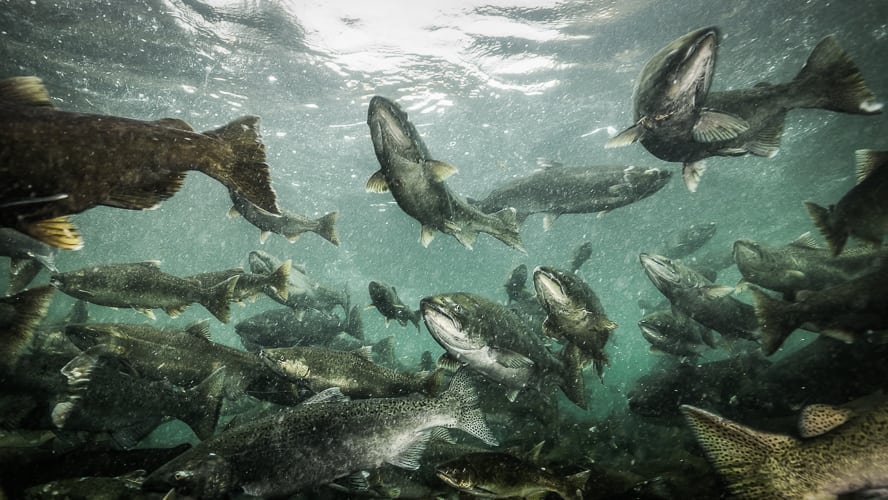
    The oldest Norwegian document that describes salmon fishing is quite an odd one. It’s not a letter, not a manuscript but… a rock. More precisely, a runic stone which used to stand on a riverbank in Southwestern Norway, some 900 years ago. The stone told about a salmon fishing station in the river. The fact that people in the early Middle Ages felt that they had to claim their ownership of good fishing waters so publicly, proves that salmon has been a big deal in Norway for close to a thousand years.

    Before the past few centuries, salt was an expensive spice for the rough fishermen who made a living catching and exporting salmon. Because of this, the fish had to be preserved in other ways. In the Middle Ages, the gravlax technique became widespread in Scandinavia but an even older technique can be found among Sámis from Finnmark. There, locals traditionally used a saltless smoking technique which consisted of drying the entire fish, heads and insides included, over a small fire for a longer period in order to trap the salmon’s tasty fat inside its meat. Once dried, such fish could be kept for weeks.

    When it comes to historical fishing methods, these varied a lot between Northern and Southern Norway. Coastal Sámi fishermen used a combination of harpoons, nets, and the building of small temporary dams on the side of rivers to catch fish. In Southern Norway, the favored technique, born in the Middle Ages, was the varp. A varp was a river trap made of a giant net that could be closed by pulling a rope from the shore. In the 17th and 18th centuries, fishermen developed better nets and boats in order to gain access to the great salmon shoals in the open sea.

    For the longest time, salmon was such a prized export good that very few fishermen had the means to serve any to their family. Yet, unwilling to disappoint them, fishermen would often resort to a sneaky strategy to surprise their loved ones: instead of using expensive salmon, they instead used much-cheaper pollock. They’d then dye it with red lobster powder before salting, smoking and sugaring it to make it look, and maybe even taste a bit, like salmon. That dish was traditionally called skomakarlaks (“cobbler’s salmon”) stressing that, in those days, salmon was not for low-class households. One can only be thankful that such a situation does no prevail anymore!

    Sources:

    • Andersen, Christian (1977). Tilberedning av laksefisk i gammel og ny tid. Ottar 35-39.
    •  Eikset, Kjell Roger, Heitmann Kari and Nielsen, Jens Petter (2001). I Storlaksen rike, Historie om Altaelva og Alta Laksefiskeri Interessentskap. Alta: Alta Laksefiskeri Interessentskap.
    •  Fjelde Larsen, Marion (2014). Næringsmangfoldet ved kysten i middelalderen. In Nils Kolle and Alf Ragnar Nielsen (Eds): Norges fiskeri- og kysthistorie, Fangstmenn, fiskerbønder og værfolk, fram til 1720. Bergen: Fagbokforlaget Vigmostad & Bjørke AS (233-260).
    •  Storeide, Moreno (1994). Fra Lofotkokkens Grytter. Stamsund: Orkana Forlag. 43.
  • Gravlax: The Arctic Origins of a Legendary Dish

    Gravlax: The Arctic Origins of a Legendary Dish

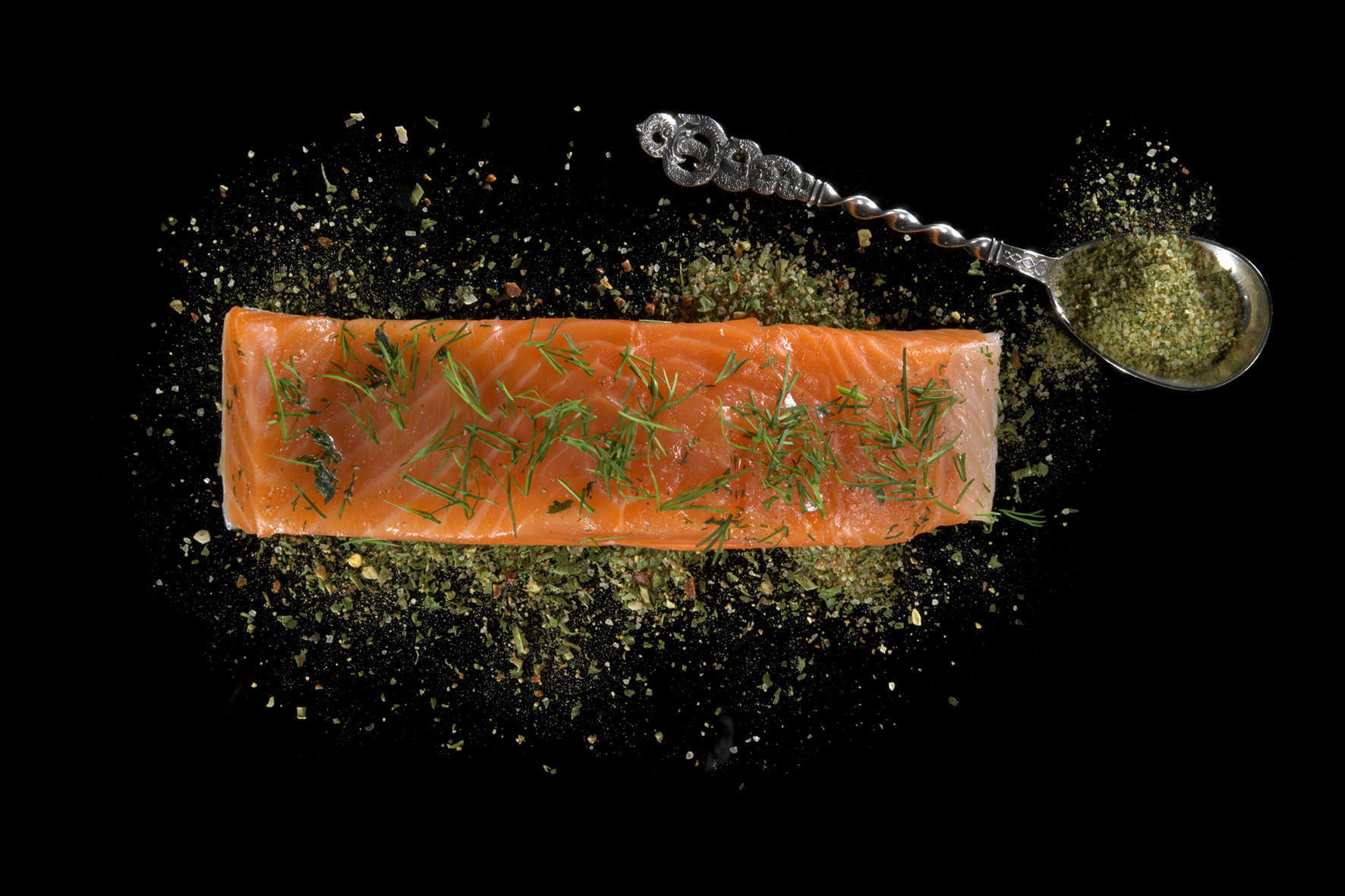
    Gravlax is one of the few world-famous Scandinavian dishes out there, and while many know that it is basically prepared with salmon and herbs, few know its ancient, Arctic history.

    The origin of gravlax can be traced all the way back to 14th-century North-Sweden. In the Middle-Ages, salt was expensive and most foods had to be preserved using alternative methods. In North-Sweden, peasants and fishermen developed a unique technique called gravad lax (“buried salmon” hence the name gravlax): The filleted salmon was placed in a hole in the earth, covered with birch bark and laid in a bath of water, the fish’s own blood and various spices and herbs. The result was a rather strong-smelling product that would be closer to todays infamous surströmming (fermented herring) than the gravlax that is eaten nowadays.

    Over time, gravlax-making techniques evolved, and the introduction of salt and dill, among other things, lead to the development of a much gentler dish. In Arctic Norway, North-Sweden’s nearest neighbour, it soon became customary to make use of a curing blend made of salt, pepper, honey, local spirits and, of course, dill to soften and ripen the fish in a uniquely delectable way.

    After about 72 hours of curing, the gravlax is generally ready to be served. However, in many North-Norwegian households, no gravlax dish would be served without a proper mustard sauce crafted from traditional mustard powder, oil, flour and extra dill. This somewhat more modern local variation on traditional gravlax was particularly popular among coastal communities such as Karlsøy, where it has been enjoyed by generations of Hegelunds for close to four centuries.

    Sources:

    • Kaspersen, Ardis (1990). Havgodt fra Nord-Norge. Oslo: Cappelen.
    • Moe, Nils Harald (2007). Tradisjonmat fra nord. Tromsø: Vitus Forlag.
    • Waldenström, Victor (2001). Laks!. Trans. Mette-Cathrine Jahr. Oslo: Cappelen

    Related article:

    Authentic Arctic Smoked Salmon à la Hegelund


  • Authentic Arctic Smoked Salmon à la Hegelund

    Authentic Arctic Smoked Salmon à la Hegelund

    When Morten C. Hegelund arrived in Karlsøy in 1635, he brought much more than his own person and possessions; he took with him his familial culture of Danish refinement encompassing, among other things, traditional knowledge of smoked salmon, cooking and food preparation.

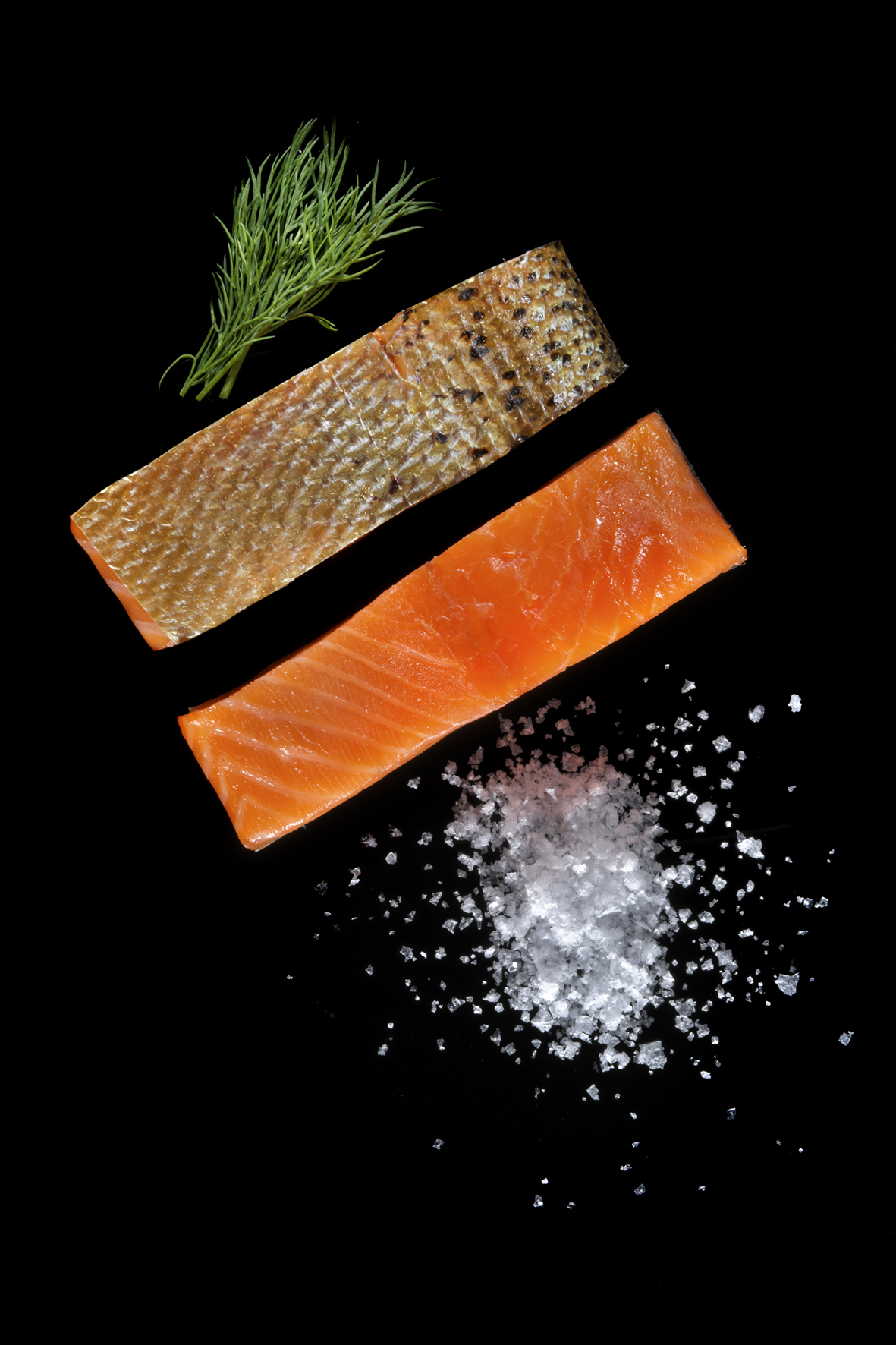
    By the 17th century, smoked salmon was already a well-established fare, both in Scandinavia and further south on the continent. Traditionally laid in a salt bath, rinsed, and smoked for a period ranging from a few hours to several days, smoked salmon first became a staple food of the high society in France, before becoming popular throughout Northern Europe as well.

    Now living right by the outstanding salmon-lakes of Ringvatnet and Skogsfjordvatnet, once owned of the powerful bishop of Trondheim, the Hegelunds were able, through trial and error, to fuse this aristocratic tradition with unique local knowledge.

    Cold-smoking the fish over a juniper fire, adding various spirits to the filets during the smoking process, and other similar innovations ultimately resulted in some of the most-celebrated gourmet dishes on this side of the Arctic Circle.

    Fueled by their customary passion for everything food-related and an uncommon pioneering spirit, the family slowly developed their own recipes and gastronomical traditions; traditions that survive to this day through the works of the House of Hegelund.

    Sources:

    • Fjelde Larsen, Marion (2014). Næringsmangfoldet ved kysten i middelalderen. In Nils Kolle and Alf Ragnar Nielsen (Eds): Norges fiskeri- og kysthistorie, Fangstmenn, fiskerbønder og værfolk, fram til 1720. Bergen: Fagbokforlaget Vigmostad & Bjørke AS (233-260).
    • Johnsen, Henry (2005). Røking av mat, fra hobby til lidenskap. Oslo: Landbruksforlaget.
    • Kaspersen, Ardis (1990). Havgodt fra Nord-Norge. Oslo: Cappelen.
    • Waldenström, Victor (2001). Laks!. Trans. Mette-Cathrine Jahr. Oslo: Cappelen

    Related Article:

    Gravlax: The Arctic Origins of a Legendary Dish