Since 1635
The Hegelund Family
Nearly four centuries on the jagged coastline of Northern Norway, facing the ice-blue waters of the North Atlantic.
The genealogy
From Jutland to the Arctic.
In 1635, Morten C. Hegelund, of a Danish family, came north and settled in the area of Karlsøy, well above the Arctic Circle. This event marked the beginning of a near four-century long history for the Hegelund family, centered on the jagged Norwegian coastline, facing the ice-blue waters of the North Atlantic.
During these four centuries, the Hegelund clan became one of the wealthiest and most-respected families in the whole Karlsøy parish.
The family is well-known for its social engagement, creativity and assiduousness.
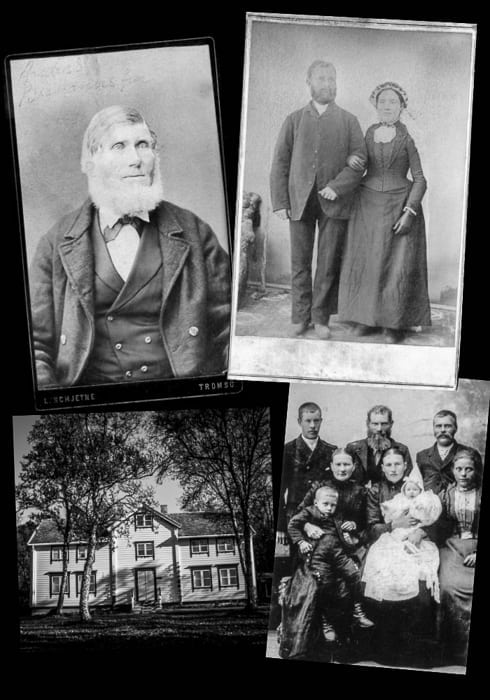
The home waters
Karlsøy, Helgøy and the islands.
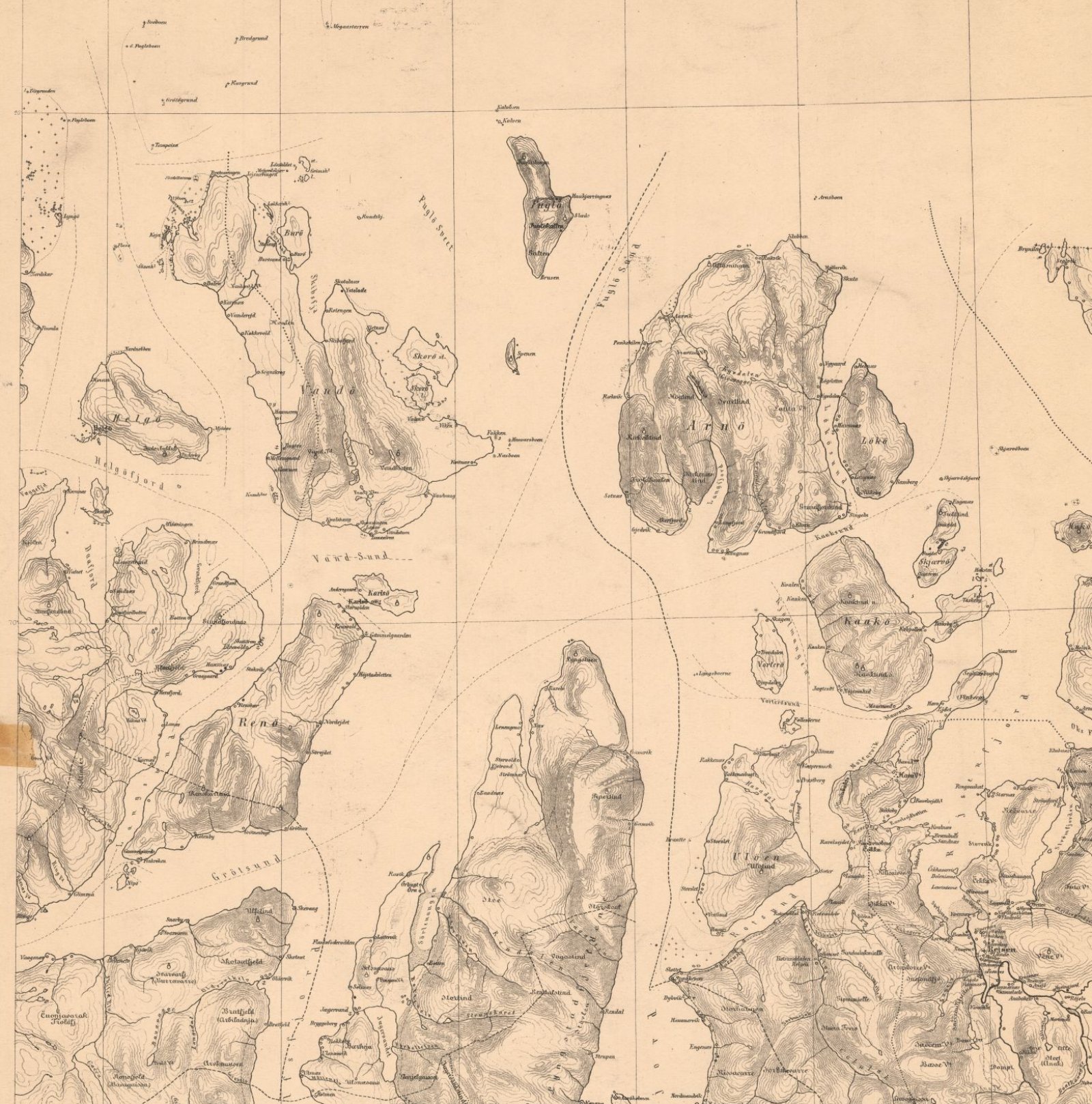
This county map from 1874 shows the islands north of Tromsø where the family lived for more than three hundred years.
Helgøy and Karlsøy, with the church where generations of Hegelunds served as parish clerks. Vannøya, with the Kvitnes trading post. Skjervøy to the east, where “the King of Skjervøy” traded. And the Lyngen peninsula rising to the south.
Click the map to see it in full size.
Surviving the Arctic
How the family held on.
The family tradition begins in 1635, when the Hegelunds came to the Arctic. What follows is the story of how they survived there – through good years and hard ones, at sea and on land.
1635 →
Sea and land
At sea, the family fished for cod and halibut. On land, they kept a few animals on thin island soil and hunted grouse in the autumn hills.
1600s–1818
Trade and the jekts
Trading posts at Hansnes, Nord-Grunnfjord, Helgøy and Kvitnes. Jekts sailed south to Bergen with fish, cod liver oil and skins. In 1818 the Kvitnes jekt made its last voyage, with a Hegelund woman in charge.
1620–1700
From wealth to poverty
Colder seas and fierce storms. Many farms on the islands were abandoned, and only the strongest households held on.
1646–47
The witch trial
Bailiff Morten C. Hegelund held Anne Torleifsdatter in custody for 26 weeks, and her husband Hans Persen, “Boat-Hans”, for 11. Both were burned on 8 January 1647. Family tradition says he put the husband on the fire too, just to be sure. The court records show Hans was sentenced the day before. It is a dark chapter, and part of the story.
1600s
In the poet’s verse
In The Trumpet of Nordland, the priest-poet Petter Dass sang of Finnkroken on Reinøya, and mocked the Skjervøy merchant – Christen M. Heggelund – who took the coins from the altar.
1746 · 1811
Lost at sea
Parish clerk Fredrik Hegelund drowned in 1746 with his two sons. In 1811, the trader Søren Martinus Heggelund of Oldervik was lost at sea with his farmhand and a maid.
1944–45
The Lyngen Line
The German retreat. Nord-Troms east of Lyngen was forcibly evacuated and burned to the ground.
Today
Still here
The family is still in the North, carrying the spirit forward from Tromsø.
Through the generations
From Hegelund to Klingenberg.
An unbroken line from father to son, from the bailiff who settled in Karlsøy in 1635 to the family today. Before that, the line runs back through Viborg in Jutland to Christen Mortensen Hegelund, born around 1410.
c. 1600–1660
Morten Christensen Heggelund
Bailiff of Troms. Comes north in 1635 and settles at Elvevoll, today’s Hansnes on Ringvassøy. Bailiff until about 1658.
1631–1700
Hans Mortensen Heggelund
Came north with his father in 1635. Hansnes – “Hans’s headland” – is believed to be named after him. The richest man in the parish when he died in 1700.
1683–1759
Søren Hansen Heggelund
Through the 1700s the family serves as parish clerks at Helgøy church.
1731–1767
Morten Sørensen Heggelund
1764–1812
Morten Mortensen Hegelund
Marries Anne Malene Hegelund.
c. 1796
Jacob Klingenberg
Takes the name Klingenberg. Marries Nille Severina Figenschou in 1824.
1839–1890
Søren Christian Klingenberg
Born at Kammen on Vannøya. Drowned at Hamre in December 1890.
1867
Kristian Sørensen
The family now carries the father’s name, Sørensen.
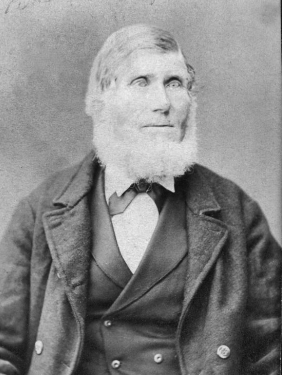
Nils Andreas “Storingen”
Nils Andreas “Storingen” Heggelund (1848–1925) was born at Gåsvær and became a well-known character in Tromsø, a fisherman and farmer who owned several properties on Kvaløya and Tromsøya. His home was the farm at Lanes on Kvaløya. He married Anna Fredrikke (1852–1946), daughter of Anders Heggelund of Straumsbukta, and the two were remembered as local celebrities, known for their social engagement.
In 1910 three generations lived together at Lanes: Storingen and Anna, their daughter Amalie with her husband Ole, and their children, among them little Ingeborg, born there in 1905.
Spellings vary through the centuries: Hegelund, Heggelund. Sources: the family tree, and Håvard Dahl Bratrein, Bygdebok for Karlsøy og Helgøy.
From the family archive
Stories of the clan.
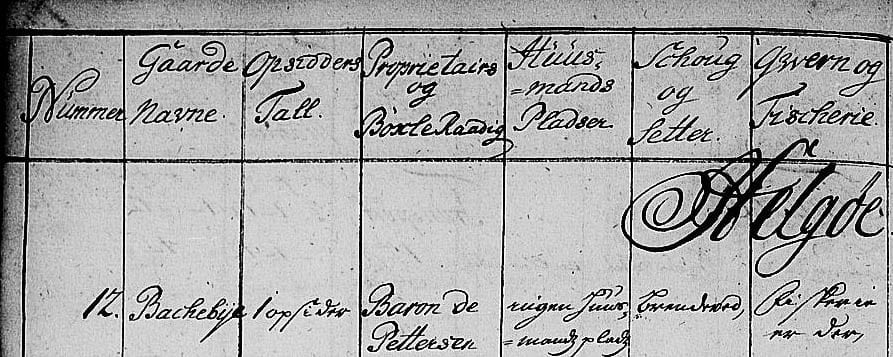
The Danish Origins of the Clan
Viborg, Ribe and Ebeltoft on the Jutland peninsula, where the family came from.
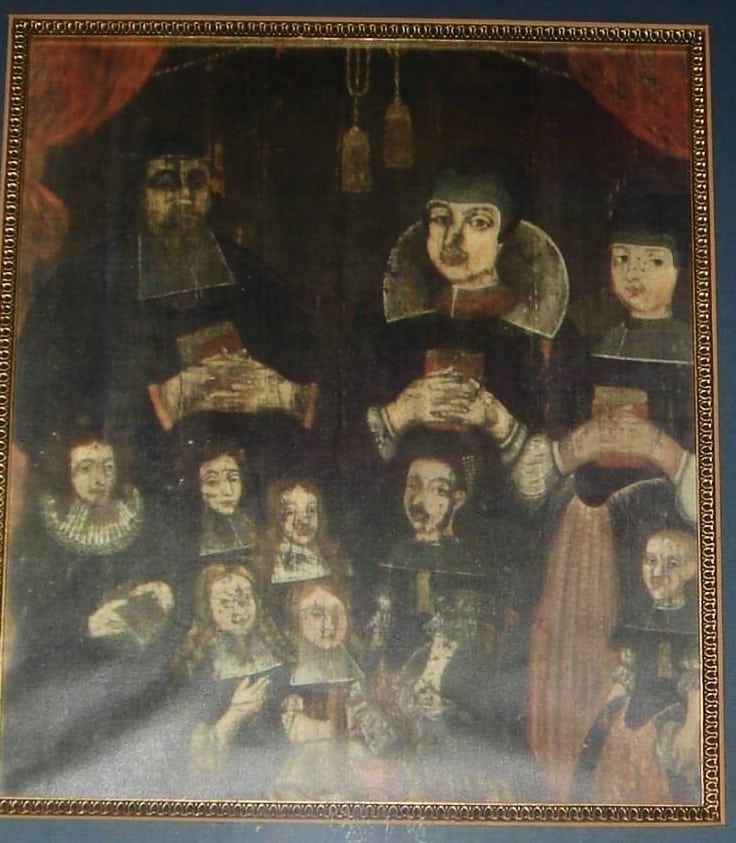
Hegelund Profiles: the 1600s
The bailiff of Troms, the King of Skjervøy and the strict vicar of Karlsøy.
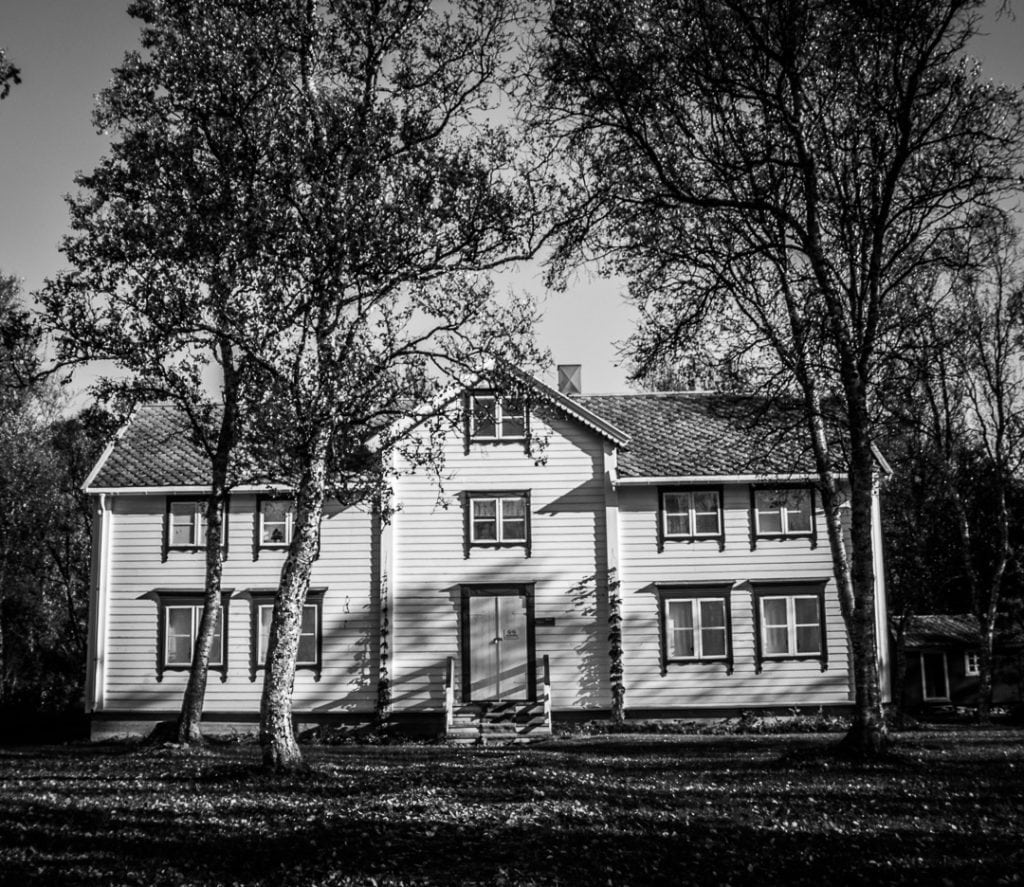
The family today